In today’s fast-globalizing world, Islamic Education & Learning is an ageless system, which enlightens the mind, the soul, and the character. It is a comprehensive system consisting of spiritual development, intellectual inquiry, and moral uprightness, ensuring an evened-out framework for the individual and society. For individuals who want to maintain Islamic values and achievement in modern society, Islamic education provides a tradition-based system responsive to the needs of today.
Why Islamic Education Matters
Why should we care? Islamic Education & Learning facilitates individual development, consolidates cultural identity, and encourages moral living. It equips one to cope with the challenges of life without losing hold of Islam. This article reflects on the beliefs, benefits, and pragmatic ways of applying Islamic education in contemporary life, giving teachers, parents, and children guidelines.
The Pillars of Islamic Learning & Education
Historical Background of Islamic Education
Islamic Learning & Education traces its origin to the 7th century. Early Islamic institutions of learning, such as the House of Wisdom in Baghdad, were centers of learning globally, where Greek, Persian, and Indian books were translated by scholars while laying the foundations of such fields as mathematics, astronomy, and medicine. Madrasas, or Islamic institutions of learning, transformed into community institutions, providing Quranic learning in addition to vocational training.
Intellectual titans such as Imam Al-Ghazali significantly featured in Islamic pedagogic history. The pursuit of knowledge by Al-Ghazali was religious in nature and accompanied by moral growth through the application of intellectual faculties. This is Islamic heritage, also more than sufficiently illustrated in the Hadith: “Seek knowledge from the cradle to the grave.” This warm appeal to the acquisition of knowledge is characteristic of the importance Islam gives to scholarship as a vocation and not as some form of schooling.
Basic Principles of Islamic Learning
Islamic Education & Learning basically brings religious and worldly knowledge together. Islamic Education & Learning leads students to think of the Quran and Hadith, not religious scriptures, but as books of guidance for right living. Quran study is the core focus, with major emphasis on recitation, interpretation, and implementation in life.
As significant is the focus laid on moral development. Islamic education focuses on values such as justice, compassion, and honesty, and it develops individuals who are liberal to society. Islamic education is distinct from secular education, where students are socialized to become academically successful within school, because it balances intellectual and moral development and thus creates mature and well-adjusted individuals.
Must Visit: Unwavering Meaning in Urdu: Strength, Resilience, Grit
Advantages of Islamic Education & Learning
Personal Development
Islamic Education & Learning enhances discipline, critical thinking, and self-awareness. Islamic Learning forces the student to learn difficult subjects like the Quran and Hadith and forces him or her to think. Islamic studies encourage a person to think, hence allowing him or her to harmonize his or her beliefs with values.
Islam’s lifelong learning is a religious practice. Seeking knowledge is worship that educates one on humility and a growth mindset. For instance, memorization of the Quran demands persistence and patience that can be applied to other aspects of life, including work and relationships.
Cultural and Religious Preservation
Islamic Learning & Education today asserts religious and cultural identity. It causes students to be proud of their heritage, and Islamic virtues of modesty, respect, and gratitude take on meaning. To young Muslims living in multicultural societies, such education gives them a sense of identity and belonging.
Islamic heritage also encompasses preserving traditions like Arabic calligraphy or Islamic poetry. These traditions contribute to making an individual proud of their identity even in the case of assimilation.
Building Communities
Islamic education promotes harmony and moral behavior in societies. Through such values as cooperation and compassion, it equips individuals to help others. Social responsibility values such as Zakat (charity) and Sadaqah (voluntary App to Support Islamic Education in Modern Institutions
Islamic Curriculum Development
Incorporation of Islamic Learning & Education into modern systems requires a balanced curriculum. Islamic education can be incorporated in fields such as science, technology, engineering, and mathematics (STEM). These are Islamic history learned together with world history in context, and Quranic training incorporated into language arts with the focus on Arabic reading.
Brief readings of the Quran or recitation of Hadith may be included in daily routines in addition to religious studies without loading students. This will provide Islamic values as a complement, not a contradiction, to secular studies.
The Role of Technology in Islamic Study
Islamic Learning & Education has been transformed by technology. Webservices like Quran.com provide interactive recitation and translation services, and Quran education is now capable of reaching around the entire world. Apps like Muslim Pro are filled with daily Hadith, prayer reminders, and Islamic trivia, enabling lifelong learning in Islam.
Virtual madrasas have also been created, offering Islamic studies to distant region students. Video lectures, quizzes, and forums are employed by them to deliver interactive study sessions, crossing geographical borders.
Teacher Training and Parental Involvement
A sound Islamic education hinges on excellent educators. Educators trained in the pedagogy of Islam have the ability to involve students in challenging and connected learning, relating timeless teachings with the contemporary era. This training is imparted to teachers through professional development activities like those organized by the Islamic Teacher Education Program.
Parents are also included. By repeating Islamic values at home, through evening retelling of the Prophet’s story or family conversation regarding donating to charity, parents create an enabling environment for learning. Every day activities like common prayer remind a child that he belongs to his faith.
Challenges and Solutions
Adoption of Islamic education is SEGMENTED by myths that it’s archaic or incompatible with the current system. This may be challenged by citing good examples, such as prosperous Islamic schools where pupils excel in religious and worldly subjects.
Underfunded areas are deprived of resources too. This issue is addressed using local fundraising, collaboration with NGOs, and use of free web resources. An example is how NGOs such as Islamic Relief avail educational materials for poor communities.
Case Studies and Real-Life Examples
Global Examples
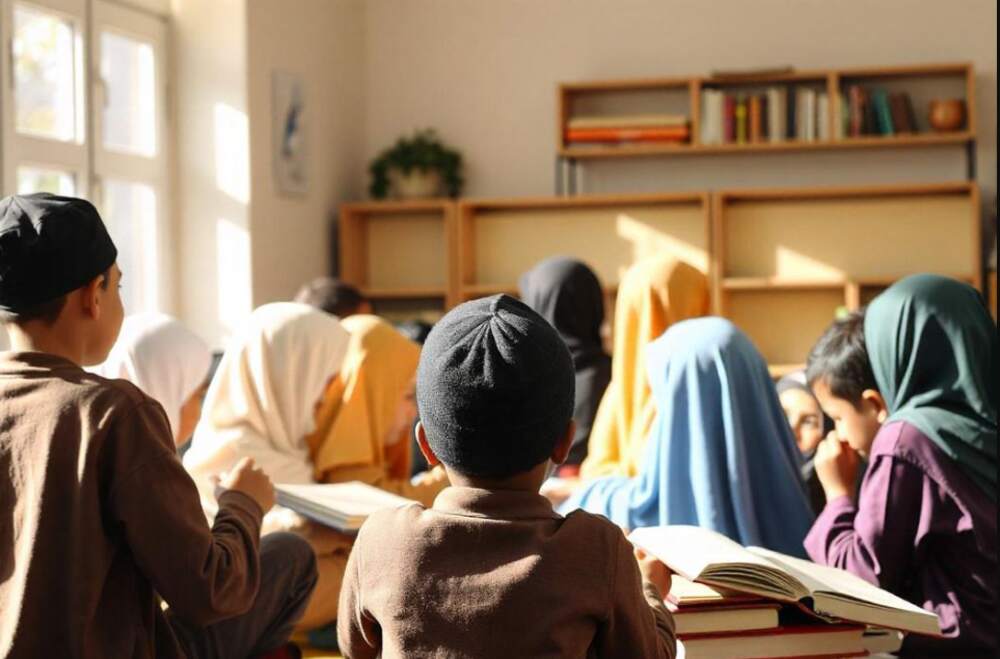
These include examples like Egypt’s Al-Azhar University, which is a modern Islamic education. Al-Azhar combines Islamic schooling with medicine, engineering, and humanities, and graduates students well-versed in numerous areas. Islamic schools like Islamia Primary School in the UK combine Quranic schooling with the national curriculum and achieve outstanding academic achievements.
Community programs such as American weekend Islamic schools target families who need additional education. They offer study in Arabic, Quran, and Islamic history and encourage cultural pride among young Muslims.
Innovative Programs
Islamic Learning & Education has changed by means of internet resources. Bayyinah Institute teaches Quranic Arabic, and a person can learn the beautiful Quranic language. Quran.com gives recitations on audio with translation into various languages, and one can learn the Quranic content by making this possible.
Mobile apps like Hadith of the Day offer learning on a daily basis, and Islamic lifelong learning is encouraged. One can utilize the applications with ease, and Islamic studies are incorporated into one’s daily life.
FAQs About Islamic Education & Learning
What is Islamic Learning & Education, and why do we need it?
Islamic Learning & Education is soul education, mind education, and ethics education based on the Quran and Hadith. It is relevant because it generates well-rounded individuals who live virtuously and have a positive influence on society.
How are Islamic values added to contemporary systems of education?
By combining Islamic studies with other secular subjects in curriculum design and technology application, schools can incorporate Islamic values, inclusive of STEM studies and humanities studies in order to attain relevance in today’s world.
What are the advantages of Quranic education to children?
Quranic education instilled discipline, enhanced memory, and cultivated moral character. It also endowed an indestructible link with religion, allowing the children to cope with hardship with resilience.
How can technology be used to support lifelong learning in Islam?
Websites and apps give access to recitation of Quran, Hadith, and Islamic education, and learning is easy and fun for individuals of any age.
What are the challenges to Islamic schools in non-Muslim nations?
Challenges are finance, misconceptions, and curriculum restrictions. Solutions are acceptance by community, advocacy, and highlighting education success to gain acceptance.
How do parents facilitate Islamic studies at home?
Parents can listen to Islamic stories, pray together, and do apps in their regular study. A faith-positive environment leads to loving Islamic study.
Conclusion: Islamic Education & Learning
Islamic Learning & Education is not a system—it’s a lifestyle. It develops individuals, safeguards culture, and constructs more harmonious societies. By unifying divine education with global information, it makes people winners in the world. Regardless of whether you are an educator, student, or parent, you can utilize Islamic education by watching online tutorials, giving to madrasas in your community, or advocating for open curricula. Start now: visit websites such as Quran.com, enroll in a course, or pass on this information. Let us all work together to empower and encourage the next generations through Islamic Education & Learning.
For more informative blogs, visit ThePakistaniPost.