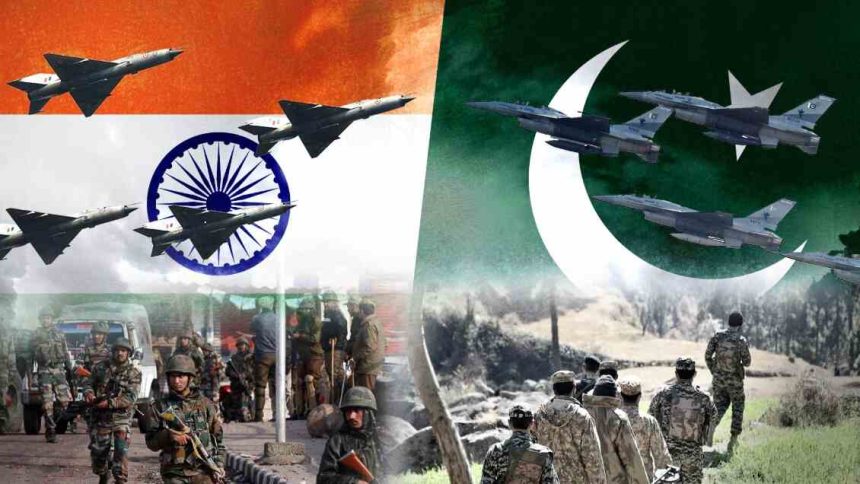
India-Pakistan tensions: The historical India-Pakistan conflict has finally reached a new low after India’s May 7, 2025, missile strikes against suspected terror camps within Pakistan. The “Operation Sindoor” strikes came in response to a terrorist attack on April 22, 2025, within Indian-occupied Kashmir, killing 26 tourists. This crisis has raised alarm globally, with Turkey threatening “all-out war” and Qatar volunteering to facilitate de-escalation talks. This article seeks to cover what is happening currently, responses globally, and what everyone wants to know about this volatile conflict, with the hope of giving readers a helpful and insightful overview of what is going on in this pivotal issue.
Main Reason: To inform readers of recent India-Pakistan tensions, highlight global diplomatic efforts to avert further war, and provide answers to the most immediate questions people have regarding the crisis.
The Current Situation: A Disturbing Escalation
Origins of the Conflict
The India-Pakistan conflict is, by nature, grounded in the disputed land of Kashmir, which is wholly claimed by both countries yet bifurcated since 1947. The April 22 attack, attributed by The Resistance Front (TRF), a self-styled offshoot of Pakistan-based militant group Lashkar-e-Taiba, and took the lives of 26 tourists, was the deadliest since 2000 in Indian-occupied Kashmir. India accused Pakistan of backing the attackers, something Islamabad denies, calling for a neutral probe.
India’s suspension of the 1960 Indus Waters Treaty has heightened tensions further, an act that Pakistan termed as an “act of war” because of the risk of destabilizing water supplies vital to 240 million Pakistanis. Diplomatic actions have also been employed by both countries, such as expelling ambassadors, closing borders, and suspending trade.
For More: Pakistan-India Clash: Live Updates & Key Insights | Read Now
Global Reaction and Diplomatic Initiatives
Risk of “All-Out War” by Turkey
Turkey, the close ally of Pakistan, condemned India’s attacks, saying they had the potential to initiate an “all-out war” between the nuclear rivals. Ankara’s foreign ministry condemned civilian and infrastructure attacks and urged restraint on both sides and supported Pakistan’s request for an investigation into the April 22 attack. Turkey’s President Recep Tayyip Erdogan, who had earlier visited Islamabad in February 2025 to strengthen defense ties, has maintained firm support for Pakistan.
Egypt Calls for Calm Amid India-Pakistan Tensions
On May 7, 2025, the Arab Republic of Egypt expressed grave concern over the intensifying India-Pakistan tensions, sparked by India’s missile strikes and subsequent cross-border shelling that led to significant loss of life and injuries. In an official statement from Cairo’s Ministry of Foreign Affairs, Egypt stressed the critical need for immediate de-escalation to prevent further destabilization across South Asia, a region already fraught with historical rivalries.
“Egypt is deeply troubled by the recent escalation of India-Pakistan tensions, marked by cross-border exchanges of fire that have caused numerous casualties,” the ministry declared. “It is imperative that both nations exercise maximum restraint and refrain from actions that could further inflame this volatile situation.”
Egypt urged New Delhi and Islamabad to prioritize diplomatic channels over military confrontation, advocating for peaceful resolutions that reflect the shared desires of their peoples for security, stability, and prosperity. With a long-standing legacy of mediating conflicts, such as its pivotal role in Arab-Israeli peace negotiations, Egypt reaffirmed its commitment to supporting international efforts to restore calm. Cairo’s appeal complements other diplomatic initiatives, such as Qatar’s mediation offer, in seeking to avert a broader conflict that could have catastrophic regional consequences.
Qatar’s Mediation Initiative
Qatar has also positioned itself as an important diplomatic power, with Prime Minister Mohammed bin Abdulrahman Al Thani making an invitation to host de-escalation negotiations in a telephone call to Pakistani Prime Minister Shehbaz Sharif on May 7, 2025. Sharif appreciated Qatar’s gesture, calling India’s attacks an attack on Pakistan’s sovereignty and affirming Pakistan’s devotion to peace while promising to protect its soil. Qatar’s track record of mediation, like in the case of Israel-Hamas talks, makes it a trusted facilitator.
Other International Reactions
-
United States: US Secretary of State Marco Rubio summoned both nations to remain calm, referencing cooperation during an investigation into the attack on Kashmir. President Donald Trump labeled India’s strikes “a shame” and urged a quick resolution.
-
China: Pakistan’s political ally, China, criticized India’s action and urged restraint, citing threats to regional security.
-
United Nations: UN Secretary-General António Guterres spoke of “catastrophic” possibilities and proposed mediation, asserting that a military clash “could easily get out of hand.”
-
Russia, UAE, and UK: Russia and the UAE urged restraint, while the UK provided dialogue support, drawing on its recently negotiated trade agreement with India.
For More: India-Pakistan Conflict 2025: Untold Story & Impact
Questions About the India-Pakistan Tensions
Is a Full-Scale War Likely?
India and Pakistan both have nuclear arsenals, so there are fears of escalating catastrophically. Military strategists indicate that neither will resort to full-scale war because of the mutual nuclear deterrence, but small wars are likely to be miscalculated. The 2019 Balakot crisis, during which India conducted airstrikes and Pakistan responded with retaliation, was ended quickly through diplomacy and restraint, with hopes of de-escalation. But Pakistan’s “quid pro quo plus” policy of retaliation and India’s “Cold Start” policy of rapid conventional strikes raise the stakes.
How Will Suspension of the Indus Waters Treaty Affect Pakistan?
India’s suspension of the Indus Waters Treaty risks depriving Pakistan of essential water supplies, potentially affecting agriculture and livelihoods for millions. Pakistan has stated that diversion of water would be an “act of war,” emphasizing the role of the treaty as a stabilizing factor through previous tensions.
Can Diplomacy Prevent Further Escalation?
Diplomatic ties are tense, with little direct contact between Islamabad and New Delhi. But outside mediators such as Qatar, the UAE, and the UN can play a crucial role. The UAE’s achievement of a 2021 LoC ceasefire shows the ability of Gulf states to mediate.
What Are the Humanitarian Impacts?
Bombing has resulted in huge civilian deaths, 26 dead and 46 wounded, according to Pakistan. More than 1,000 Islamic schools have been shut in Pakistan-administered Kashmir, and civilians are digging bunkers. Crackdowns against security in Indian-administered Kashmir have resulted in 1,500 detentions, which have raised human rights concerns.
Pathways to De-Escalation
Strengthening Diplomatic Channels
Re-establishing direct communication, e.g., weekly military discussions conducted in the midst of tension, might minimize misunderstandings. Backchannels need to be given top priority by international mediators to enable diplomacy without media drama.
Neutral Investigations
Pakistan’s insistence on an open investigation into the April 22 attack, backed by Turkey and possibly Qatar, might minimize India’s accusations and build confidence. A UN or a neutral third-party investigation would silence retaliatory measures.
Regional Cooperation
Involving regional players such as China and the Gulf states could introduce a wider vision for stability. The Pakistan-occupied Kashmir route for the China-Pakistan Economic Corridor emphasizes China’s desire for peace.
India-Pakistan tensions
India-Pakistan relations, restarted by the April 22 Kashmir attack and India’s subsequent retaliatory strikes, are at a perilous stage. Turkey’s threat of “all-out war” and Qatar’s attempts at mediation demonstrate worldwide concern at the prospect of nuclear war. The people want to know the chances of war, the effects of water treaty conflicts, and the chances of diplomacy. Though both countries have restrained themselves during previous crises, the present situation calls for immediate international intervention to avoid miscalculations. By favoring impartial probes and calling for diplomacy, the international community can nudge South Asia toward peace, saving millions from the ruinous effects of war.