

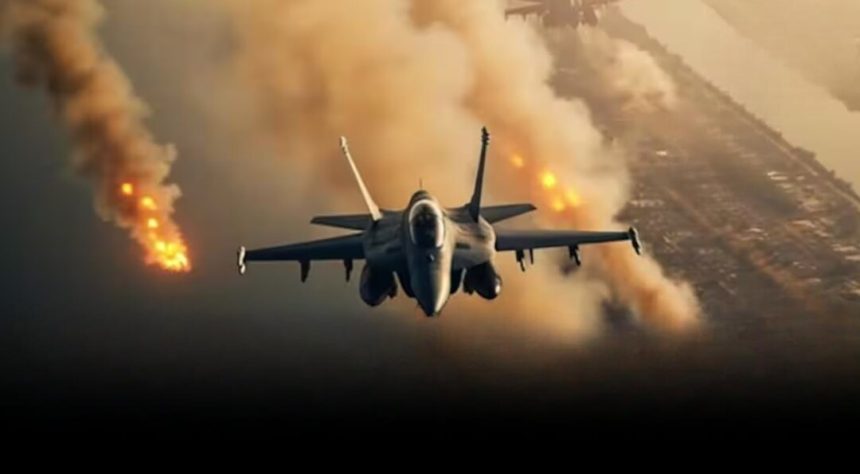
Pakistan-India Clash: Deterioration in Pakistan-India relations, both nuclear powers and neighboring countries, has reached a critical point following a series of armed attacks and counterattacks along the Line of Control (LoC) in Kashmir. The recent clashes, which were initiated by a terror attack on Pahalgam that left 26 tourists dead, have caused heavy casualties, infrastructure damage, and heightened threats of a full-scale war.
Historical Context of the Existing Conflict
The Pahalgam Terror Attack
On April 22, 2025, a deadly militant attack in Pahalgam, Indian-held Kashmir, killed 26 tourists, who were mainly Indian nationals. Delhi accused Pakistan of supporting the militants, a charge Islamabad rejects. The attack, one of the deadliest in recent history, spawned India’s retaliation, which escalated tensions to a point not reached since the 1971 war.
Operation Sindoor: India’s Response
India initiated “Operation Sindoor” on 7 May 2025 against nine suspected terror camps in Pakistan and Pakistani-occupied Kashmir. The Indian Defence Ministry described the raid as “focused, measured, and non-escalatory, intended to eliminate the terrorist infrastructure of organizations like Lashkar-e-Taiba and Jaish-e-Mohammed. The operation involved 24 precision missile attacks, with India claiming that no civilian or military targets were hit.
Live Updates of Pakistan-India Clash
Indian Missile Attacks and Targets
India’s air fleet employed the Rafale fighter jets with SCALP cruise missiles to attack locations in Muzaffarabad, Kotli, Muridke, and Bahawalpur. Indian authorities, such as Foreign Secretary Vikram Misri, suggested that the attacks were pre-emptive, due to intelligence on impending attacks. Among the targets were training camps that were thought to be responsible for previous attacks, including Ajmal Kasab and David Headley’s attacks.
Pakistan’s Military Response
Pakistan denounced the attacks as an “act of war” and announced that its military was authorized to take “corresponding action.” Pakistan Air Force fighter jets were scrambled, which reported shooting down five Indian aircraft and a drone. Pakistan’s military forces reported attacking civilian targets, including Kotli’s mosque, and threatened a fierce retaliation at a time and place of its choice, citing Article 51 of the UN Charter as a right of self-defense.
Escalation on the Line of Control
Exchange of heavy artillery across the LoC has intensified, with both sides witnessing civilian casualties. Pakistan deployed tanks and artillery to border areas, while India closed northern airports and conducted rehearsal exercises in 244 districts, showing heightened vigilance. The exchanges are the worst in over two decades, and the world is alarmed at the prospect of nuclear escalation.
Must read: India-Pakistan Conflict 2025: Untold Story & Impact
Civilian and Humanitarian Losses
Indian Attacks: Pakistan’s Allegations
Pakistan experienced 26 civilian deaths, including women and children, and 46 injuries due to Indian attacks. Specific incidents include the death of a child in Ahmedpur’s East and a 16-year-old girl in Kotli, and the destruction of a mosque in Pakistan-administered Kashmir. Pakistani officials, such as Lieutenant General Ahmed Sharif Chaudhry, condemned attacks on civilian targets.
Pakistani Shelling: India’s Reports
India said 10 civilians were killed and 48 were wounded by Pakistani fire along the LoC. Seven civilians were killed and 30 were wounded by Indian police during the night, and border villages were shifted to safer locations. Indian officials have stated that their attack was not directed at civilian targets, which is something Pakistan is disputing.
Neelum-Jhelum Hydro Power Project Damage
Strategic Importance of the Project
The Neelum-Jhelum Hydro Power Project, located 42 km south of Muzaffarabad in Pakistan-administered Kashmir, is a critical energy project with a 969-megawatt capacity. It is catering to Pakistan’s energy requirements and agriculture, which is heavily reliant on the Indus River system. It has been a point of contention against India’s upstream dams like Kishanganga, which affect water flows.
Scope of Damage and Effect
Pakistan’s military reported that Indian fire hit the Neelum-Jhelum project during the evening of May 6-7, 2025. How much damage occurred is unclear, but any disruption would worsen Pakistan’s energy deficits and fuel domestic turmoil. The attack has increased alarm about India’s suspension of the Indus Waters Treaty, which would further stress Pakistan’s water and electricity resources.
Questions About the Pakistan-India Clash
Will the Conflict Escalate Further?
Both nations’ nuclear capability renders escalation an international concern. Pakistan can resort to retaliatory limited strikes against border facilities to avoid a full-blown war, analysts opine, while Indian restraint in hitting military targets is to contain the conflict. Pakistan’s Defense Minister Khawaja Asif warned, however, that a clash is “inevitable,” and apprehensions of escalating violence were triggered.
Global Reactions and Mediation Initiatives
Turkey and China have demanded restraint, whereas China has invoked peace for the region’s sake. India’s National Security Adviser Ajit Doval updated the U.S. government, but government mediation has yet to take prominence. The international community is suspicious of a nuclear conflict, and the UN Charter has been appealed to by Pakistan in its defense. Everyone wants to hear accounts of diplomatic gestures to de-escalate the situation.
Impact on Regional Stability and Civilians
Both sides experience displacement and loss, hardest hit being border communities. Suspension of the Indus Waters Treaty and infrastructure destruction, such as that to Neelum-Jhelum, pose long-term economic stability risks, especially in Pakistan, where agriculture benefits from 94% of water resources. Readers are interested in humanitarian aid and the wider regional consequences of the war.
Pakistan-India Clash
Pakistan’s sanctioned retaliation has pushed the region to a dangerous precipice. With 26 civilians dead in Pakistan and 10 in India, in addition to damage to key infrastructure such as the Neelum-Jhelum Hydro Power Project, the human and economic cost is high. As the two countries exchange fire and words, the world holds its breath, hoping diplomacy will win over escalation. Stakeholders need to make dialogue their top priority to save civilians and stabilize the region, ensuring the shared history and interdependence of Pakistan and India lead to peace.

